The Ultimate Showdown: Asus Zenbook A14 A16 2026 vs Lg Gram Book for 2026
The premium ultrabook market has reached a fascinating crossroads in 2026. For years, the formula for a high-end laptop was relatively static: shave off a few millimeters of thickness, increase the screen-to-body ratio, and hope the battery lasts through a trans-Atlantic flight. However, the release of the Asus Zenbook A14 and A16 series alongside the newest iteration of the LG Gram Book represents a divergence in philosophy. On one side, Asus is pushing the boundaries of material science and integrated AI performance with their "Ceraluminum" aesthetics and high-TDP thin-and-light designs. On the other, LG remains the undisputed champion of mass-defying engineering, proving that a 16-inch or 17-inch canvas doesn't have to weigh more than a liter of water.
As we move further into a workspace reality defined by hybrid flexibility and localized "Edge AI" processing, the criteria for the "perfect" laptop have shifted. It is no longer enough for a machine to be portable; it must be sustainably built, offer a display that rivals professional reference monitors, and possess enough neural processing power to handle real-time background tasks without spinning up fans to audible levels. This article provides a deep-dive analysis into how these two titans of the industry—the Asus Zenbook A14/A16 and the LG Gram Book—stack up against each other for the 2026 model year.
The Asus Zenbook A14 & A16 (2026): The New Aesthetic of Power
Asus has spent the last several seasons refining its identity, moving away from the "gamer-centric" aesthetic of its past and into a realm of sophisticated, architectural design. The 2026 Zenbook A14 and A16 models are the culmination of this transition. The most striking feature of these machines is the chassis material. Asus continues to utilize its plasma-ceramic aluminum, a process that transforms the surface of the metal into a ceramic-like texture that is both incredibly scratch-resistant and fingerprint-averse. This isn't just about looks; the material allows Asus to maintain structural rigidity while keeping the device slim enough to disappear into a leather portfolio.
Under the hood, the Zenbook A14 and A16 are built around the latest silicon architectures that prioritize NPU (Neural Processing Unit) performance. For the 2026 models, Asus has focused on thermal management that allows for a higher sustained wattage than previous generations. In the A16 specifically, the larger footprint is used not just for a bigger screen, but for a sophisticated dual-fan cooling system that remains silent during standard productivity tasks. The A16 is particularly interesting as it bridges the gap between a portable productivity machine and a legitimate creative workstation, offering enough graphical horsepower for 4K video editing and light 3D rendering without the bulk of a traditional "gaming" laptop.
Zenbook Pros and Cons
- Pro: Superior Build Materials: The plasma-ceramic finish is arguably the best-feeling surface in the laptop world, offering a unique tactile experience that feels more like stone than cold metal.
- Pro: Lumina OLED Excellence: The 2026 displays feature 120Hz refresh rates with peak brightness levels reaching 600 nits, making them some of the best screens for HDR content consumption and professional color grading.
- Pro: Keyboard and Input: Asus has perfected the 1.7mm key travel, providing a tactile feedback loop that is often missing from ultra-thin competitors. The ErgoSense touchpad is also larger and smoother than in previous years.
- Con: Weight vs. Portability: While slim, the A16 is noticeably denser than the LG Gram. Those who prioritize absolute lightness over structural density might feel the weight during long commutes.
- Con: Glossy Screen Reflections: While the OLED is beautiful, the lack of a true matte option in high-end configurations can make working under harsh overhead office lights a challenge.
The LG Gram Book (2026): The Weightless Wonder
LG has built its reputation on a single, incredible feat: making large laptops feel like they aren't there. The 2026 LG Gram Book continues this tradition but adds a much-needed layer of modern refinement. Historically, the Gram was criticized for a certain amount of "flex" in the keyboard deck—a side effect of its magnesium alloy construction. In the 2026 model, LG has reinforced the internal bracing without adding significant grams to the total weight. The result is a laptop that feels significantly more "premium" and solid, while still maintaining that surreal lightness that makes you check your bag to ensure it's actually in there.
The LG Gram's philosophy for 2026 is centered on "all-day endurance." While Asus pushes for higher performance peaks, LG has optimized its firmware and hardware for maximum efficiency. The battery life on the 16-inch Gram Book is reaching legendary status, frequently eclipsing 20 hours of real-world productivity use. This makes it the ultimate tool for the traveler, the executive who jumps from meeting to meeting without a charger, and the student who lives in the library. Furthermore, LG has finally moved its flagship Gram line to high-resolution OLED panels, closing the display quality gap that previously gave Asus a significant advantage.
LG Gram Pros and Cons
- Pro: Unrivaled Lightness: Even the largest 17-inch variant weighs less than most 13-inch competitors, which is a physical marvel that never gets old.
- Pro: Battery Longevity: The synergy between the magnesium chassis and high-density battery cells allows for the longest "up-time" in the Windows ecosystem.
- Pro: Connectivity: Despite its thin profile, LG continues to include a full array of ports, including HDMI and multiple USB-A ports, alongside Thunderbolt 4, reducing the need for dongles.
- Con: Thermal Throttling: To keep the fans quiet and the chassis thin, the Gram will throttle performance during intensive sustained tasks like video exporting more quickly than the Asus Zenbook.
- Con: Aesthetic Simplicity: The design is functional and clean, but it lacks the "wow" factor of the Asus Ceraluminum finish. It looks more like a traditional tool and less like a luxury object.
Direct Comparison: Specifications and Performance
When comparing these two devices, it is essential to look at how they manage the trade-offs between physical size and functional capability. A laptop is always a compromise between screen real estate, battery capacity, and thermal headroom. The following table highlights the key differences between the Asus flagship A16 and the LG Gram 16 for the 2026 model year.
| Feature | Asus Zenbook A16 (2026) | LG Gram Book 16 (2026) |
|---|---|---|
| Chassis Material | Plasma-Ceramic Aluminum | Nano-Carbon Magnesium Alloy |
| Weight | Approx. 1.55 kg (3.4 lbs) | Approx. 1.19 kg (2.6 lbs) |
| Display Technology | Lumina OLED, 120Hz, 3K Resolution | WQXGA OLED, 90Hz-120Hz VRR |
| NPU Performance | High-Tier (Up to 50+ TOPS) | Standard-Tier (Optimized for Efficiency) |
| Hinges | 180-degree ErgoLift | Standard 140-degree |
| Sound System | Harman Kardon Quad Speakers | Dolby Atmos Dual Speakers |
| Charging | USB-C Easy Charge (up to 100W) | USB-C PD (up to 65W/80W) |
Performance in Real-World Use Cases
To truly understand which laptop is right for you, we must look at how these technical specifications translate into daily life. The "Ultimate Showdown" isn't just about benchmarks; it's about the friction—or lack thereof—in your workflow.
Find top-rated Laptops & Computers products at great prices.
See Deals →The Mobile Professional and Digital Nomad
If your "office" changes every day, the LG Gram Book is your strongest ally. The weight difference might seem small on paper (roughly 350 grams), but over the course of a day spent walking through airports or across city campuses, that weight is cumulative. The Gram's ability to remain cool on your lap during a three-hour train ride is also superior due to its lower-wattage tuning. It is a machine that prioritizes being out of the way until you need it.
The Content Creator and Visual Artist
The Asus Zenbook A16 wins in this category decisively. The 120Hz Lumina OLED display offers better color accuracy out of the box (Delta E < 1) and higher peak brightness for HDR editing. More importantly, the cooling solution in the Zenbook allows for higher sustained clock speeds on the CPU and GPU. If you are rendering a 10-minute video for social media, the Zenbook will likely finish the task 20% to 30% faster than the Gram. The structural rigidity of the Asus also makes it feel more like a serious tool for intensive work.
The Hybrid Office Worker
For those who commute to a desk but also spend half their time in meetings or working from home, the Asus Zenbook A14 (the 16's smaller sibling) provides a middle ground. It offers the premium feel and NPU power of the larger Zenbook but in a footprint that rivals the Gram for packability. However, if your hybrid work involves lots of data entry or multi-window multitasking, the LG Gram 16’s larger screen in a lighter body is a massive ergonomic advantage.
Buying Guide: Key Considerations for the 2026 Buyer
When selecting between the Asus Zenbook and the LG Gram in 2026, you should ask yourself several specific questions that go beyond the spec sheet. The "better" laptop depends entirely on your personal tolerance for weight and your need for sustained processing power.
1. Is the NPU a Priority?
In 2026, Windows and macOS have both deeply integrated AI features. From real-time live captions and meeting summaries to generative fill in photo editing apps, the Neural Processing Unit is doing more work than ever. Asus has leaned heavily into this, positioning the Zenbook as an "AI-First" PC. If you use a lot of local AI tools, the higher TOPS (Tera Operations Per Second) rating on the Zenbook might offer a smoother experience as software evolves over the next three years.

2. The "Lapability" Factor
The LG Gram is designed with a very flat bottom and excellent heat distribution, making it one of the most comfortable laptops to actually use on your lap. The Asus Zenbook uses its "ErgoLift" hinge to tilt the keyboard for better typing ergonomics, but this can sometimes feel slightly more "pointy" on your legs if you aren't at a desk. If you work from a couch frequently, the LG design is often preferred.
3. Port Requirements
LG has been very generous with ports on the Gram line, often including two USB-A ports even in 2026. Asus has moved more toward a USB-C centric world, though they usually keep an HDMI port and one USB-A. Check your peripheral needs; if you still use a "legacy" thumb drive or a wired mouse, the LG might save you from the "dongle life."
Find top-rated Laptops & Computers products at great prices.
Browse Now →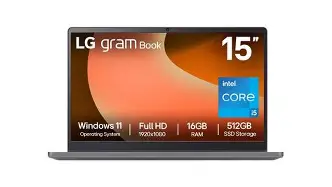
4. Screen Aspect Ratio and Productivity
Both brands have embraced the 16:10 aspect ratio, which provides more vertical space for reading documents and coding. However, Asus’s choice of a 3K resolution on the A16 provides a higher pixel density (PPI) than the standard Gram 16. If you are sensitive to seeing individual pixels or if you work with high-resolution photography, the Asus display will appear noticeably sharper.
Advanced Features: Security and Sustainability
In 2026, we cannot ignore the environmental impact of these devices. Asus has made significant strides in their "Carbon Neutral" initiatives, using recycled metals and eco-friendly packaging for the Zenbook line. The ceramic finish itself is created through a process that uses fewer harmful chemicals than traditional anodization. LG, meanwhile, focuses on longevity; a laptop that lasts six years instead of three is inherently more sustainable. The Gram's MIL-STD-810H durability rating ensures that despite its light weight, it can survive drops, vibrations, and extreme temperatures.
From a security perspective, both devices feature infrared cameras for Windows Hello facial recognition. Asus has added a dedicated "AI Privacy" sensor that can automatically dim the screen if it detects someone looking over your shoulder or lock the PC when you walk away. LG offers similar software-based "Mirametrix" features, but Asus’s integration into the hardware level in 2026 feels slightly more seamless and less taxing on the battery.
Conclusion
The battle between the Asus Zenbook A14/A16 and the LG Gram Book for 2026 is essentially a fight between Sensation and Utility. The Asus Zenbook is a sensory triumph. It is a laptop you want to touch, to look at, and to push to its limits. It offers the best display technology available and a build quality that feels purposeful and indestructible. For those who view their laptop as a statement of their professional standards and who require the horsepower to create, the Zenbook is the clear winner.
Conversely, the LG Gram Book is the ultimate utility player. It does not try to be a luxury object; it tries to be a invisible tool. Its magic lies in its lack of presence—the way it doesn't strain your shoulder and the way its battery simply refuses to die. For the student, the writer, and the high-travel professional, the Gram offers a liberating experience that no other manufacturer has quite managed to replicate. It is the victory of physics over expectation.
Ultimately, your choice should be dictated by your primary environment. If you spend 80% of your time at a desk, the Asus Zenbook’s superior screen and power will serve you better. If you spend 80% of your time on the move, the LG Gram’s weightlessness will be a benefit you appreciate every single time you pick it up. In 2026, there is no wrong answer, only a choice between two different versions of excellence.